- Home Page
- Fact Tours
Our sample tour itineraries of China and China travel packages are sorted by theme and available at competitive prices, you can browse what tours are right for you for your trip to China.
Popular China Tour Packages

Custom Tour Packages to China and Ask Our Experts for Free Enquiry !
- Coach Tours
- Destinations
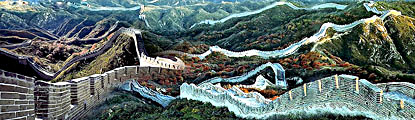
Beijing, the capital of China. Its art treasures and universities have long made it a center of culture and art in China.
Beijing Top Attractions
Beijing City Tours
Best China Tours with Beijing
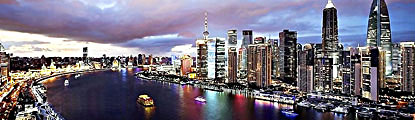
Shanghai, the cultural and economic center of East Asia. It renowned for its historical landmarks, the extensive and growing skyline.
Shanghai Top Attractions
Shanghai City Tours
Best China Tours with Shanghai
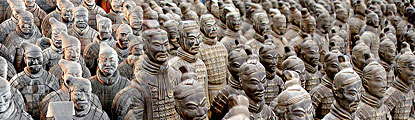
Xi'an, having held the position under several of the most important dynasties. It is the top destination to explore the facts of Chinese history.
Xi'an Top Attractions
Xi'an City Tours
Best China Tours with Xi'an
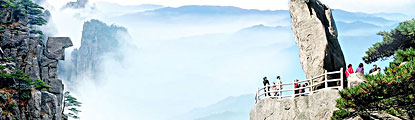
Huangshan boasts its culture, beautiful rivers, villages and mountains. It's home to 2 UNESCO World Heritage Sites and the Mecca of photographers.
Huangshan Top Attractions
Huangshan City Tours
Best China Tours with Huangshan
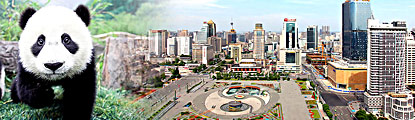
Sichuan is the cradle of the Shu culture, panda, mahjong, teahouse and spicy food. The province ranks first in China by number of UNESCO World Heritage Sites. It is called "the Heaven of Abundance".
Sichuan Top Attractions
Sichuan Tour Packages
Best China Tours with Sichuan
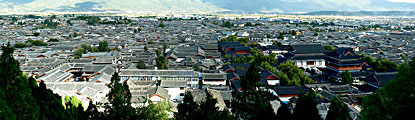
Yunnan, literally means the south of colorful clouds, due to its beautiful landscapes, mild climate and diverse ethnic cultures and traditions, is one of China's major tourist destinations.
Yunnan Top Attractions
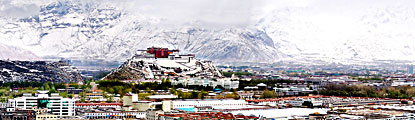
Tibet, the nearest land to the sky, is known for its breathtaking landscape, splendid culture, art, buildings, and mysterious religions.
Tibet Top Attractions
Tibet Tour Packages
Best China Tours with Tibet
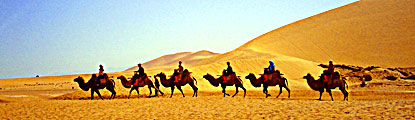
Explore the lost civilizations by riding a camel! Travel across the Gobi and the desert, and over the high mountains. Our Silk Road tours including different sections of the Silk Road in China.
Silk Road Top Attractions
Silk Road Tour Packages
Best China Tours with Silk Road
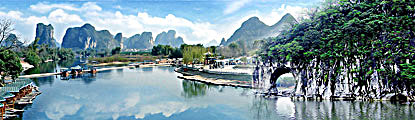
Guilin, an internationally-known historical and cultural city, has long been renowned for its unique karst scenery. Its vicinities are the paradise of hiking, caving, rafting, biking and countryside exploring.
Guilin Top Attractions
- China Facts
- China Hotels
- Travel Photos

Design China Tour!
Not find a wish tour? Select from A La Carte. We do the rest on your interest!
China Facts & Culture


Food, Cuisine, Drink
Longjing Tea
Longjing tea or Dragon Well tea is a famous variety of green tea from Hangzhou of Zhejiang Province, where it is produced mostly by hand and has been renowned worldwide. The tea is grown in the Longjing mountain area of Hangzhou, southwest of the Wes
» View MoreWuyi Rock Tea
Wu Yi Rock Tea (Wu Yi Yan Cha) is a special subcategory of Wulong tea grown in the Wuyi Mountain in Fujian Provice. Wu Yi Mountain is a UNSECO World Heritage site, internationally recognized and protected for its biological diversity and significance
» View MoreHuangshan Maofeng Tea
Huangshan Maofeng tea is featured by slightly coiled leaves, slender starwort-like shape, yellowish green, unveiled silver pekoe, and golden jannum. After brewing it in boiled water, the steam will arise and linger above the yellowish clear green liq
» View MoreKeemun Black Tea
Keemun black tea, produced in Qimen County of Anhui provice, is the traditional famous-brand tea in China. ("Keemun" was the English spelling for "Qimen" during the colonial era. Today, many people like to call the tea: Qimen black te
» View MoreAnxi Tieguanyin Tea
Anxi Tieguanyin is a preeminent variety of Oolong tea. Anxi, a small and mountainous county in southeast China's Fujian Province, is hailed as the birthplace of this special tea.
» View MoreBiluochun Tea
Bi Luo Chun is a famous green tea originally grown in the Dong Ting mountain of Tai Hu, Jiangsu Province. It is one of the ten most famous Chinese tea. Also known as Pi Lo Chun, it is renowned for its delicate appearance, fruity taste, floral aroma,
» View MoreJunshan Yinzhen Tea
Junshan Yinzhen(literally "Silver Needle of the Gentleman Mountain") is a rare and precious Yellow tea from Junshan Island of Hunan Province in China. It is honored as the king of Yellow teas and ranks among the rarest of China's famous t
» View MoreLiuan Guapian Tea
Liu An Gua Pian has a long history and rich cultural connotation. It was early recorded in the famous book The Classic of Tea in Tang Dynasty. In ancient time, it was listed among the tributes to the emperors, while in modern times it is specified as
» View More
 Leave Message
Home | About Us | Partnerships | Terms & Conditions | Privacy & Security | Payment Guide | Resource Links| Sitemap
Email: contact@chinafacttours.com, Tel: +86-773-3810160, Fax: (+86) 773-3810333
Copyright © 2008-2020 China Fact Tours. All rights reserved
